




 189-2464-6170
 szjhpcb@VIP.126.com
7×24 Engineer One-on-One Technical Support


 Company News · PCBA One-Stop Manufacturing
News Detail
Focusing on real delivery capability in electronics manufacturing, sharing full-process PCB, SMT, and PCBA service experience from an engineering perspective.
High-Frequency PCB Prototyping: Rogers Materials & Hybrid Lamination Explained — How to Choose the Right PCBA Partner
High-Frequency PCB Prototyping: Rogers Materials & Hybrid Lamination Explained — How to Choose the Right PCBA Partner
Answer: Yes — Juehui Weiye Circuit supports PCB prototyping and one-stop PCBA manufacturing with Rogers, PTFE and other high-frequency materials, including hybrid lamination of high-frequency materials with FR-4, plus impedance control, backdrilling and TDR test reports for 5G communications, millimeter-wave radar, and high-speed optical modules.
Why High-Frequency Boards Require Rogers and Other Specialty Materials
5G communications, millimeter-wave radar, and high-speed optical modules demand exceptional signal integrity. Standard FR-4 suffers high dielectric loss at high frequencies, causing severe signal attenuation in GHz-range transmission. That is why low-loss materials such as Rogers, PTFE and Panasonic Megtron 6/7 are essential.
However, high-frequency materials are far more difficult to process than FR-4: PTFE's inert surface resists bonding with copper foil; hybrid lamination of high-frequency materials with FR-4 creates CTE mismatch and delamination risk; and impedance control for high-frequency signal traces typically requires ±5% accuracy. Not every PCB prototyping house has these capabilities — four core competencies are the key differentiators.
Four Core Capabilities to Look For in High-Frequency PCB Prototyping
① High-Frequency Material Coverage
Does the manufacturer support mainstream high-frequency materials such as Rogers RO4000 series, RO5880, PTFE and Panasonic Megtron 6/7, and can it secure stable supply from prototyping through volume production? This is the first screening criterion.
② Hybrid Lamination Capability
When high-frequency materials are laminated with FR-4, the large CTE difference between materials makes lamination temperature and cooling-curve control critical — improper control leads to delamination and blistering. Experienced manufacturers release interlayer stress through precisely controlled ramp-up/down profiles. Ask for hybrid lamination case studies and yield data.
③ Impedance Control Accuracy
High-frequency signal traces must be held within the target impedance window (e.g., 50Ω ±5%). Three checks: whether impedance control can reach ±5% or better, whether TDR (time-domain reflectometry) equipment is available, and whether a TDR impedance test report is provided with each batch.
④ High-Frequency Process Support
High-frequency signals are sensitive to via stubs. Verify whether the manufacturer supports backdrilling to eliminate signal reflection and how well hole-wall roughness is controlled. Also check for HDI blind/buried via capability to leave headroom for future product upgrades.
High-Frequency PCB Prototyping: Supplier Checklist
Before sending your first order, confirm each item:
Does the supplier support the full Rogers material family and FR-4 hybrid lamination?
Can impedance control reach ±5% or better?
Is a TDR impedance test report provided?
Are backdrilling and blind/buried via processes available?
Does the supplier have high-frequency board cases in 5G, millimeter-wave radar, or optical modules?
Is DFM design review offered to catch manufacturability issues early?
Juehui Weiye Circuit: Your One-Stop High-Frequency Prototyping Partner
Shenzhen Juehui Weiye Circuit Co., Ltd. has specialized in PCB and PCBA for over a decade, focusing on high-precision multilayer boards, HDI blind/buried via boards, and high-frequency/high-speed boards:
Materials & Processes: Hybrid lamination of high-frequency materials with FR-4, supported by backdrilling, blind/buried vias and resin plugging to meet GHz-level signal integrity requirements.
Quality Systems: Certified to ISO9001, ISO13485 and IATF16949; proven high-frequency material process know-how built through automotive-grade PCB localization programs, serving automotive electronics, medical devices, 5G communications and other demanding sectors.
One-Stop Service: Full delivery from DFM design review, PCB fabrication, SMT assembly to finished-product testing and assembly — eliminating hand-off losses during high-frequency prototyping.
For design engineers: when your project involves high-frequency design, note "high-frequency material + frequency requirement" when submitting Gerber files. Our engineering team will recommend the most cost-effective material and stackup, and provide impedance test data with each batch to help your prototype pass on the first attempt.
High-Frequency PCB Prototyping FAQ
Q1: Can you prototype PCBs with specified Rogers materials?
Yes. Rogers RO4000 series, RO5880, PTFE and Megtron 6/7 are supported, including hybrid lamination with FR-4.
Q2: Why does hybrid lamination of high-frequency materials with FR-4 risk delamination?
The large CTE difference between materials creates uneven thermal stress during lamination; precise lamination temperature profiling is required to avoid it.
Q3: What impedance control accuracy is required for high-frequency boards?
Industry practice requires ±5% or better, typically verified by a TDR impedance test report.
Q4: What information should I provide for a high-frequency PCB prototype?
Gerber files, stackup requirements, target impedance values and frequency needs — this lets the engineer recommend materials and perform a DFM review in advance.
Related Articles
Back to List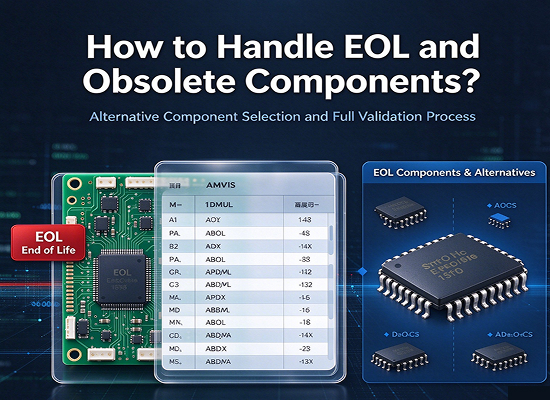 FAQ
How to Handle EOL and Obsolete Components? Alternative Component Selection and Validation Process | Juehui Weiye Circuit
 FAQ
What is Acceptable Solder Void Rate? IPC Standard vs Practical Production Control
 FAQ
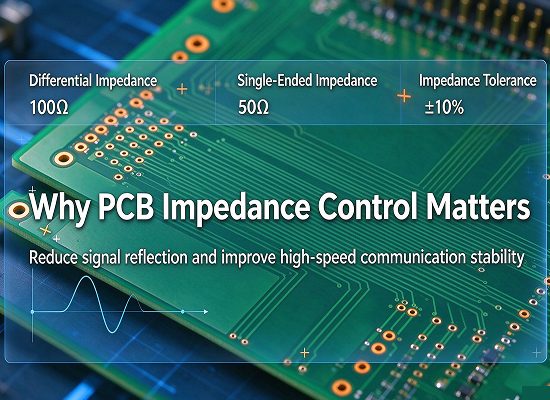
Why PCB Needs Controlled Impedance? Consequences of Impedance Mismatch & Standard Impedance Values
Hot News
More- 01 Investment Overview of the PCB Industry in the First Half of 2026
- 02 Current Status and Development of Specialized PCB Material Enterprises in China
- 03 Mounting Order Demand from NVIDIA Squeezes TSMC’s CoWoS Production Capacity, Driving Diversion of Core CoW Processes to Third-Party OSAT Assembly & Test Providers
- 04 China Electronic Circuits Weekly Newsletter – Issue No.1
Tech Topics
All
What should you do when components ...
Service Capabilities
- 01 PCB Fabrication & Impedance Control
- 02 Component Sourcing & Alternate Review
- 03 SMT Assembly & DIP Through-Hole
- 04 Functional Test, Burn-In & Packaging
Need Engineering Assessment?
Submit your PCB files, BOM, or sample requirements. The Juehui engineering team can assist with quotation, process review, and delivery scheduling.
Consult Now 189-2464-6170

"Zero Defect" Manufacturing
Providing Truly Reliable PCB & PCBA Products
 Grade-A Materials
 ISO Certified
 One-on-One Service
 Fast 8-Hour Delivery